
On November 6, 2026, the British The Telegraph reported on negotiations between Russia and Iran regarding the supply of S-400 anti-aircraft missile systems. According to a senior Iranian official, Tehran hopes to acquire the weapons it has been seeking for several years. However, Putin has two reasons not to rush: the need to protect Russian facilities from Ukrainian strikes.
Author: Elena Gunko
A day earlier, on November 5, Iran’s Secretary of the Supreme National Security Council Mohsen Rezaei met with Putin in the Kremlin and delivered a personal message from the country’s supreme leader Mojtaba Khamenei. However, The Telegraph learned about its content related to the S-400 from an anonymous Iranian source. Neither Moscow nor Tehran has officially announced the signing of a contract.
What Iran wants to get from Russia
The S-400 “Triumph” is an air defense system designed to engage aircraft, drones, cruise missiles, and some ballistic targets. It is not a single missile but a complex of radar stations, launchers, command posts, and various types of missiles. Its effectiveness depends on the number of systems, crew training, and interaction with the rest of the air defense.
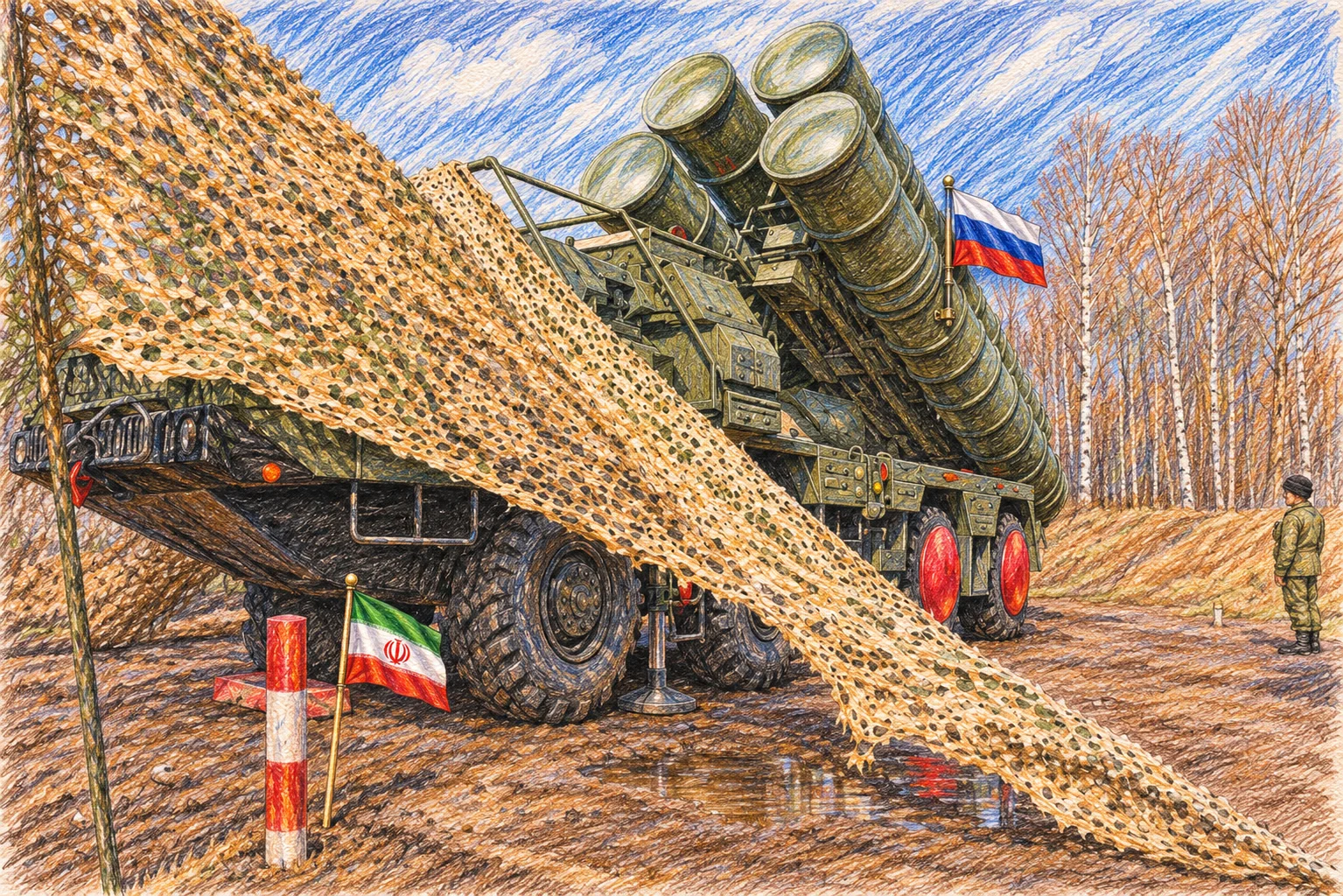
Iran needs such equipment after the strikes by Israel and the USA, which began on February 28, 2026. The attacks seriously weakened Iran’s air defense, leaving military bases, nuclear program facilities, and command structures vulnerable. On November 3, the USA again struck anti-aircraft positions on Qeshm Island in the Strait of Hormuz. American officials called the operation limited and defensive.
Publicly, Rezaei spoke about negotiations on regional security, the post-war arrangement of the Middle East, and the Russian-Iranian gas pipeline. He also reiterated Tehran’s demand to fulfill seven conditions before resuming negotiations with Washington and opening the Strait of Hormuz — the most important route for exporting oil from the Persian Gulf. Putin’s consent to transfer the S-400 was not included in these statements.
Why Ukraine became an obstacle to the deal
The Telegraph highlights the burden that the Ukrainian war creates for Russian air defense. Ukrainian drones and missiles attack oil refineries, military airfields, and other facilities deep inside Russia. Moscow has to distribute air defense systems between the front and the protection of its own rear.
According to analysts, this is why Russia may not want to give Iran modern complexes that it needs itself. But it is important to distinguish between assessment and proof: there is no confirmed decision to cancel the S-400 supply specifically due to Ukrainian strikes yet.
Restrictions on Russian exports are also noticeable in another example. India, which ordered five S-400 systems back in 2018 for $5.43 billion, expects to receive the last one only in January-February 2027, although it previously expected it in November 2026. The reason for this delay cannot be linked exclusively to Ukraine without additional data.
Military cooperation continues without the S-400
On November 5, Financial Times reported on Russian production documents for 2024–2025. They indicate an order for 90 APU-L aviation launchers for guided missiles LMUR (“Product 305”). The recipient is designated by the code “K-10,” which in Russian export materials corresponds to Iran. These launchers are primarily intended for Mi-28 attack helicopters. The documents confirm the order but do not prove that the equipment has already been delivered.
The Telegraph also studied materials from a closed committee of the Iranian parliament, prepared even before the February war. Their authors proposed strengthening military cooperation with Russia and China, developing their own missiles, drones, and air defense, while simultaneously reducing the economy’s dependence on oil revenues.
NANews has already reported on Russian military cargoes arriving in Iran via the Caspian Sea. Thus, the issue of the S-400 is part of a longer-term cooperation, not an unexpected appeal from Tehran to Moscow.
What this changes for Israel
For Israeli aviation, the appearance of new long-range systems in Iran would mean the need to consider additional radar positions and interception means when planning operations. But the S-400 itself is not capable of covering the entire Iranian sky: the number of delivered complexes, their deployment, and resistance to suppression are significant.
There is also a political limitation. According to The Telegraph, Russia has been delaying such deliveries for years, fearing the consequences for relations with Israel and other countries in the region. Now, this is compounded by Russia’s own need for air defense.
In September, NANews already examined why the shortage of missiles and air defense means ties the military needs of Israel, Ukraine, and the USA. The possible S-400 deal shows the flip side of the same dependency: Ukrainian strikes on the Russian rear can affect how quickly Iran restores its defense after Israeli and American operations.
As of November 8, 2026, it is publicly known about Tehran’s request and negotiations in the Kremlin. There is no confirmation that Putin agreed to sell the S-400.