
On August 20, 1985, 96 American TOW anti-tank missiles were delivered to Iran. The sender was Israel, a state that the leadership of the Islamic Republic had openly called its enemy for several years. In September, another 408 missiles followed, and in November, a batch of HAWK anti-aircraft missiles. The deliveries were made with the knowledge of the administration of US President Ronald Reagan.
History and Facts | NANews
Author: Stas Shifer
These deals became part of the “Iran-Contra” scandal, which erupted in Washington in November 1986. It was revealed that American weapons were secretly sold to Iran, and part of the money received was used to finance armed opposition in Nicaragua, contrary to Congressional restrictions. Israel turned out to be one of the central participants in the operation, although the financial scheme to aid the Nicaraguan rebels was organized by American representatives and private intermediaries.
However, Israeli arms supplies to Iran began long before Reagan and continued even after the Islamic Revolution of 1979. To understand the reasons for these deals, it is necessary to return to a period when Tehran was one of Israel’s most important unofficial partners in the Middle East.
When Iran was a strategic partner of Israel
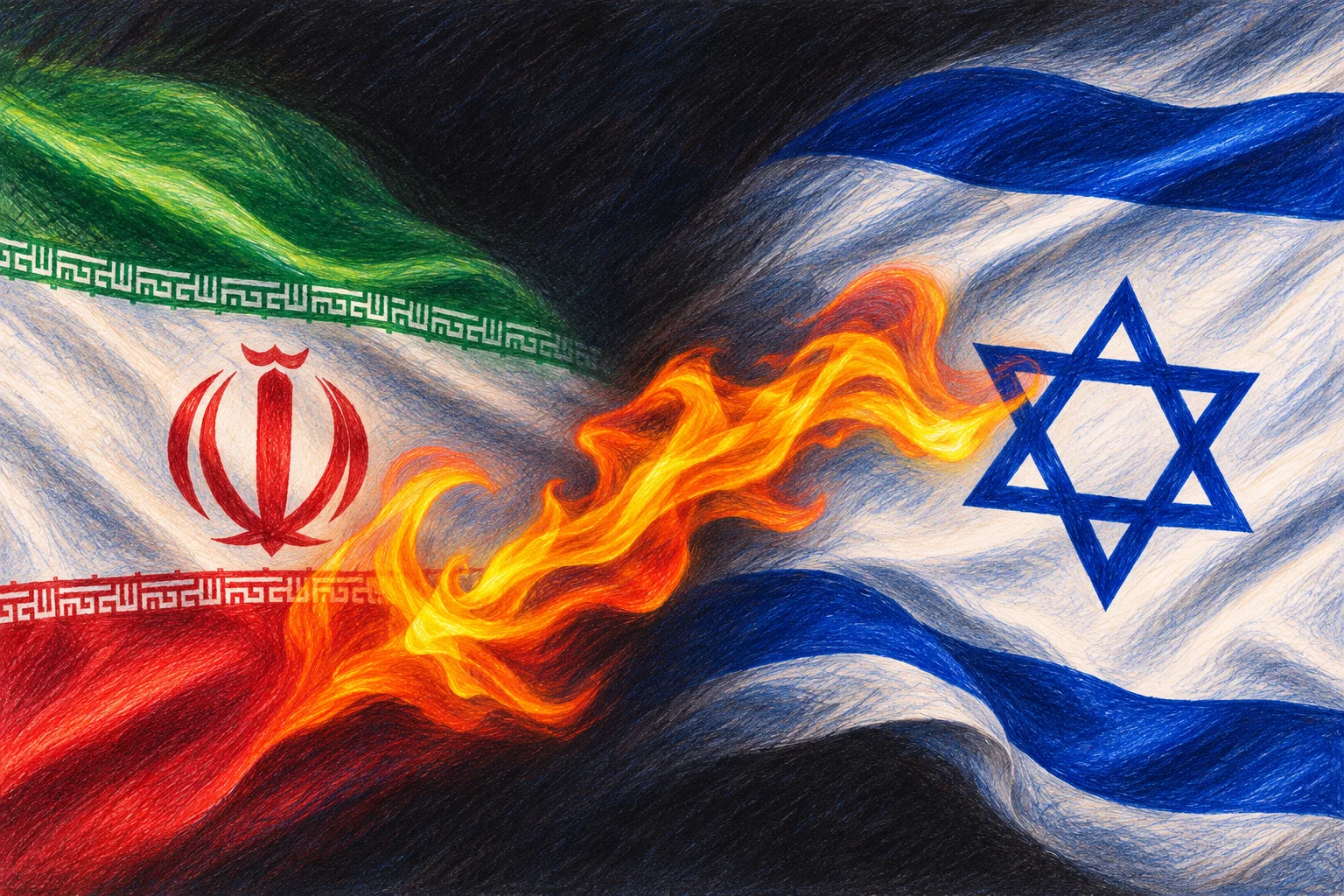
Under Shah Mohammad Reza Pahlavi, there was close military, intelligence, and economic cooperation between Israel and Iran. It was not formalized by full diplomatic relations: Tehran took into account the position of Arab states and did not recognize Israel in the full legal sense. But practical ties were not hindered by this.
In the late 1950s, Israeli Prime Minister David Ben-Gurion developed the so-called periphery doctrine. In the context of conflict with neighboring Arab states, Israel sought partners beyond its immediate surroundings. Among them were Iran, Turkey, and Ethiopia.
Iran was particularly well-suited for this strategy. It was not an Arab state, had large oil resources, maintained close relations with the US, and feared the rise of Arab nationalism, especially in Iraq. Israeli and Iranian intelligence structures cooperated, and Israeli specialists participated in the training of military personnel and the development of the defense industry of the Shah’s regime.
Cooperation also extended to the oil sector. One of its results was a system of Iranian oil supplies through Israel, linked to the Eilat-Ashkelon pipeline. For a country facing an Arab oil boycott, such a source of raw materials represented significant economic value.
In 1977, the parties began a secret missile project called Flower. It provided for the joint development of modern missile systems within a broader program of exchanging Iranian oil for Israeli military technologies. The project ceased after the revolution.
According to an estimate cited by the research project The Iran Primer, during the most intensive cooperation period in the 1970s, annual Israeli arms sales to Iran reached approximately $500 million. The scale of the relationship explains why Israel was in no hurry to consider them completely lost even after the Shah’s overthrow.
1979: The revolution severed relations but did not destroy military contacts
In February 1979, the Shah’s regime fell. The leadership headed by Ayatollah Ruhollah Khomeini came to power, proclaiming the Islamic Republic. Israel lost a strategic partner, and the new Iranian government turned the struggle against the Jewish state into one of the elements of its foreign policy.
The former Israeli representation in Tehran was handed over to the Palestine Liberation Organization. This was a clear sign of breaking with the previous policy. But a problem arose that the revolutionary leadership could not solve with political slogans.
The Iranian army was equipped mainly with American equipment purchased under the Shah. F-4 and F-14 fighters, tanks, anti-tank and anti-aircraft systems required spare parts and maintenance. After breaking relations with Washington, access to official American supplies was closed.
Israel had American-made equipment, its own repair capabilities, and specialists familiar with the Iranian army’s weapons. In addition, contacts remained between people who worked in this field before the revolution.
Former Israeli Foreign Ministry head David Kimche later explained to researchers how difficult it was for the Israeli leadership to accept the loss of long-standing relations with Iran. In Jerusalem, they hoped that revolutionary ideology would eventually give way to strategic interests, and cooperation could be restored.
This assumption turned out to be wrong in the long term, but in the early 1980s, it significantly influenced Israeli policy. These relations are thoroughly researched in the historical work Encyclopaedia Iranica.
Why Israel armed Iran during the war with Iraq
On September 22, 1980, Iraqi troops invaded Iran. Saddam Hussein hoped to take advantage of the neighboring state’s weakness after the revolution, but the ensuing war dragged on for almost eight years.
For Israel, the main immediate opponent in the region was then considered Iraq. Baghdad had a large army, was developing missile and nuclear programs, and did not hide its hostility towards Israel. Saddam’s victory over Iran could have significantly strengthened his position.
On June 7, 1981, the Israeli Air Force destroyed the Iraqi nuclear reactor “Osirak” near Baghdad during Operation Opera. The Israeli leadership viewed the reactor as a potential element of a future nuclear weapons program. However, the International Atomic Energy Agency did not confirm the use of the facility for nuclear weapons production, and the UN Security Council condemned the Israeli strike.
At the same time, Israel continued military supplies to the state that was at war with Iraq. From the perspective of the Israeli leadership at the time, these actions did not contradict each other: both were related to the desire to limit Baghdad’s military potential.
In 1980–1983, according to The Iran Primer’s estimate, the volume of Israeli arms sales to Iran amounted to about $500 million. Among the supplied items were TOW anti-tank missiles, ammunition, aircraft and tank spare parts, as well as engineering equipment. This amount remains a research estimate, as there is no complete open registry of secret contracts.
Weapons were delivered using intermediaries, private companies, and transit routes through third countries. In some operations, Iranian arms dealers with access to previous military contacts participated. Supplies continued despite American restrictions and Tehran’s public hostility.
Israeli calculations gradually changed. Initially, they hoped to restore relations with Iran, then weakening both participants in the war became increasingly important. As Kimche later explained, Israel considered it desirable for neither Iran nor Iraq to pose a serious threat to it.
But it was during these years that the Hezbollah movement developed in Lebanon, receiving support from revolutionary Iran. After the Israeli invasion of Lebanon in 1982, Tehran sent representatives of the Islamic Revolutionary Guard Corps there, who participated in the training of Shiite armed formations.
This created a historical paradox: Israel supplied weapons to Iran, while Iran simultaneously helped create an organization that waged armed struggle against Israel.
Later, the nature of this confrontation radically changed. NANews detailed how Iranian support for Hezbollah became part of a strategy to pressure Israel from multiple directions. However, it is incorrect to transfer the current threat system to the early 1980s: at that time, Israeli leaders assessed the balance of power differently.
1985: Shimon Peres, American hostages, and secret missile deals
By the mid-1980s, arms cooperation acquired a new political meaning. In Lebanon, armed groups linked to Iran held American citizens hostage. The Reagan administration sought ways to secure their release and simultaneously establish contacts with representatives of the Iranian leadership, whom Washington considered potentially open to dialogue.
On July 3, 1985, Israeli Foreign Ministry Director General David Kimche met with Reagan’s National Security Advisor Robert McFarlane. He reported on the possibility of contacts with Iranians who could facilitate the release of hostages. In return, military equipment supplies were expected from the US.
In Israel, the Prime Minister was Shimon Peres. His counter-terrorism advisor Amiram Nir, Israeli arms dealers Yaakov Nimrodi and Adolph Schwimmer participated in the negotiations. Iranian intermediary Manucher Ghorbanifar played an important role, and Saudi businessman Adnan Khashoggi provided funding for individual deals.
Khashoggi provided interim funds because the Iranian side did not want to pay until receiving the weapons, and Israeli suppliers demanded financial guarantees before shipping the cargo.
On August 20, 1985, Iran received the first 96 TOW missiles. The promised release of hostages did not occur. Israeli intermediaries continued negotiations, and in September, another 408 missiles were delivered. On September 15, American clergyman Benjamin Weir was released in Lebanon.
In November, an attempt was made to deliver HAWK anti-aircraft missiles. Due to transit and transportation issues, only 18 missiles were delivered to Iran instead of the planned large batch. The Iranians were dissatisfied with the equipment received: it did not meet their expectations. According to investigation materials, 17 missiles were later returned to Israel.
For the Israeli reader, a legal detail is significant here. TOW and HAWK missiles were American-made. The transfer of such weapons to a third country fell under American export law restrictions, so Israel required coordination with Washington and an agreement to replenish its own stocks.
President Reagan approved the initial deliveries, although Secretary of State George Shultz and Defense Secretary Caspar Weinberger opposed this policy. As a result, some decisions were made through a narrow circle of National Security Council staff without the usual coordination procedures.
1986: The US begins selling weapons directly
On January 17, 1986, Reagan signed a secret directive authorizing direct American arms deliveries to Iran. Israel retained the role of political and negotiation intermediary but was no longer the mandatory supplier of each batch.
In February, Iran received 1,000 TOW anti-tank missiles in two batches. Negotiations on the supply of components for HAWK systems continued in May and summer. Former Reagan advisor Robert McFarlane even led a secret American delegation that visited Tehran, but a full agreement and the release of all hostages could not be achieved.
In July, American clergyman Lawrence Jenco was released. In October, Iran received another 500 TOW missiles, and on November 2, American David Jacobsen was freed.
According to investigation documents, during the 1985–1986 operation, Iran received a total of 2,004 TOW missiles, 18 HAWK missiles, and batches of spare parts for anti-aircraft systems. Three American hostages were released, but during this period, two more were kidnapped in Lebanon.
Israeli representatives hoped that contacts would help restore relations with Tehran. Washington hoped to free hostages and establish relations with part of the Iranian leadership. Private intermediaries received commissions, and Iran acquired weapons needed for the war with Iraq.
But in parallel, American organizers used arms operations to solve another task unrelated to the Middle East.
How money from Iranian arms ended up with Nicaraguan rebels
In Nicaragua, since 1979, the Sandinistas led by Daniel Ortega were in power. The Reagan administration supported the armed opposition known as the “Contras,” viewing the Sandinista government as an ally of the USSR and Cuba in Central America.
The American Congress restricted the use of certain government funds to support the “Contras” military operations. These restrictions became known as the Boland Amendments. The administration sought other sources of funding, including foreign states and private donors.
A key role was played by National Security Council staff member Lieutenant Colonel Oliver North. Together with retired General Richard Secord and businessman Albert Hakim, he used a network of companies and bank accounts known as The Enterprise.
In November 1985, Israel transferred $1 million to the Lake Resources account in Geneva to organize the delivery of HAWK missiles. Actual transportation costs amounted to about $127,700, and approximately $870,000 remained at the disposal of the intermediary network.
Later, these funds mixed with other receipts and were used, in particular, to support the “Contras.” Therefore, the investigation could not link each specific dollar of the Israeli payment to a specific arms purchase for Nicaragua.
On December 6, 1985, North informed Israeli Ministry of Defense representatives that he expected to use profits from future Iranian deals for operations in Nicaragua. This episode is recorded in the Congressional investigation materials.
In 1986, the intermediary network received about $30.3 million for American weapons sold to Iran and operations to replenish Israeli stocks. Only $12.2 million was transferred to the US government. Direct expenses amounted to about $2.1 million, and approximately $16 million was illegally retained by intermediaries.
Congress estimated the amount directed from Iranian deal profits to support the “Contras” at approximately $3.8 million. Independent prosecutor Lawrence Walsh’s own calculation yielded a similar estimate — about $3.6 million. The remaining money was used for other operations and expenses or remained in accounts.
Thus, the claim that all proceeds from Israeli supplies automatically went to Nicaraguan rebels does not correspond to the established financial picture.
For comparison with modern Israeli monetary amounts: $30.3 million would nominally correspond to approximately 95.7 million ₪, and $3.8 million to about 12 million ₪ at the reference exchange rate of the Bank of Israel on November 4, 2026 — 3.157 ₪ per dollar. This is merely a currency conversion, not accounting for inflation and the purchasing power of money in the 1980s.
It is established that certain Israeli representatives knew about North’s intentions to use the profit for Nicaragua. But investigations did not present evidence that the Israeli government as a whole developed the financial scheme to aid the “Contras”.
The Tower Commission considered testimonies suggesting that the idea of redirecting money might have been discussed between North and Amiram Nir. However, the commission could not determine who originally conceived the plan. Meanwhile, the organization of funding for Nicaraguan rebels was primarily in the hands of American staff and private intermediaries, not Israeli intelligence services.
The 1986 exposure and consequences for Israel
On November 3, 1986, the Lebanese magazine Ash-Shiraa published information about secret American contacts with Iran. The scandal quickly went beyond arms supplies when it was revealed that part of the funds received was used to finance the “Contras.”
On November 25, US Attorney General Edwin Meese publicly announced the redirection of money. Congressional investigations and a special commission led by former Senator John Tower began.
President Reagan acknowledged his involvement in authorizing arms operations but denied awareness of the financial scheme to aid Nicaragua. The investigation did not establish that he personally sanctioned the transfer of profits to the “Contras.” However, it revealed serious violations in the activities of administration staff, document concealment, and bypassing parliamentary control procedures.
Criminal cases were initiated against several participants. Sentences for Oliver North and John Poindexter were later overturned due to violations related to the use of their testimony given to Congress under immunity. Several other participants received presidential pardons.
Israel acknowledged participation in arms supplies to Iran but denied organizing the financing of Nicaraguan rebels. The secret operations caused political damage to Washington and showed how closely intertwined state interests, intelligence actions, and the commercial motives of intermediaries were.
As a result, none of the original strategic goals were fully achieved. The US could not free all hostages through arms deals, and Israel did not restore relations with Iran.
After the end of the Iran-Iraq war in 1988, the need for secret purchases gradually disappeared. The collapse of the USSR and Iraq’s defeat in the 1991 war further changed the regional balance. Iran ceased to be viewed by Israeli leadership as a potential counterbalance to a strong Baghdad and gradually became one of the main strategic threats.
Why this history is important for Israel today
The history of Israeli supplies to Iran shows how much the country’s leadership’s perceptions of potential allies and adversaries have changed. In the early 1980s, Iraq was perceived in Jerusalem as a more immediate military threat. Therefore, supporting the Iranian army could be seen as a way to limit Saddam Hussein’s influence, even despite the hostile position of the new Iranian regime.
However, previous contacts did not allow for the restoration of relations with Tehran. The Islamic Republic continued to develop cooperation with armed groups acting against Israel, primarily with Hezbollah.
Later, the situation became completely different. Iranian weapons and technologies began to play an important role not only in Middle Eastern conflicts. The connection between Russia’s war against Ukraine and threats to Israel from Iranian-supported forces was examined by NANews, particularly in a material about Hezbollah’s weapons and Israeli army trophies.
In the 1980s, Israel hoped that geopolitical interests would ultimately outweigh ideological contradictions with Iran. But Tehran’s revolutionary leadership did not return to the Shah’s period policy.
This is the main result of that history: arms deals brought temporary military and commercial benefits but could not change Iran’s political course. And secret negotiations, conceived as a way to restore ties, ultimately became part of an international scandal, the consequences of which affected three continents.
Documentary basis of the material: Tower Commission report (February 27, 1987), joint report of US Congressional committees (November 18, 1987), final investigation by independent prosecutor Lawrence Walsh, historical studies Encyclopaedia Iranica and The Iran Primer.
Add NANews to Google to follow our historical research and materials on events affecting Israel and Ukraine.