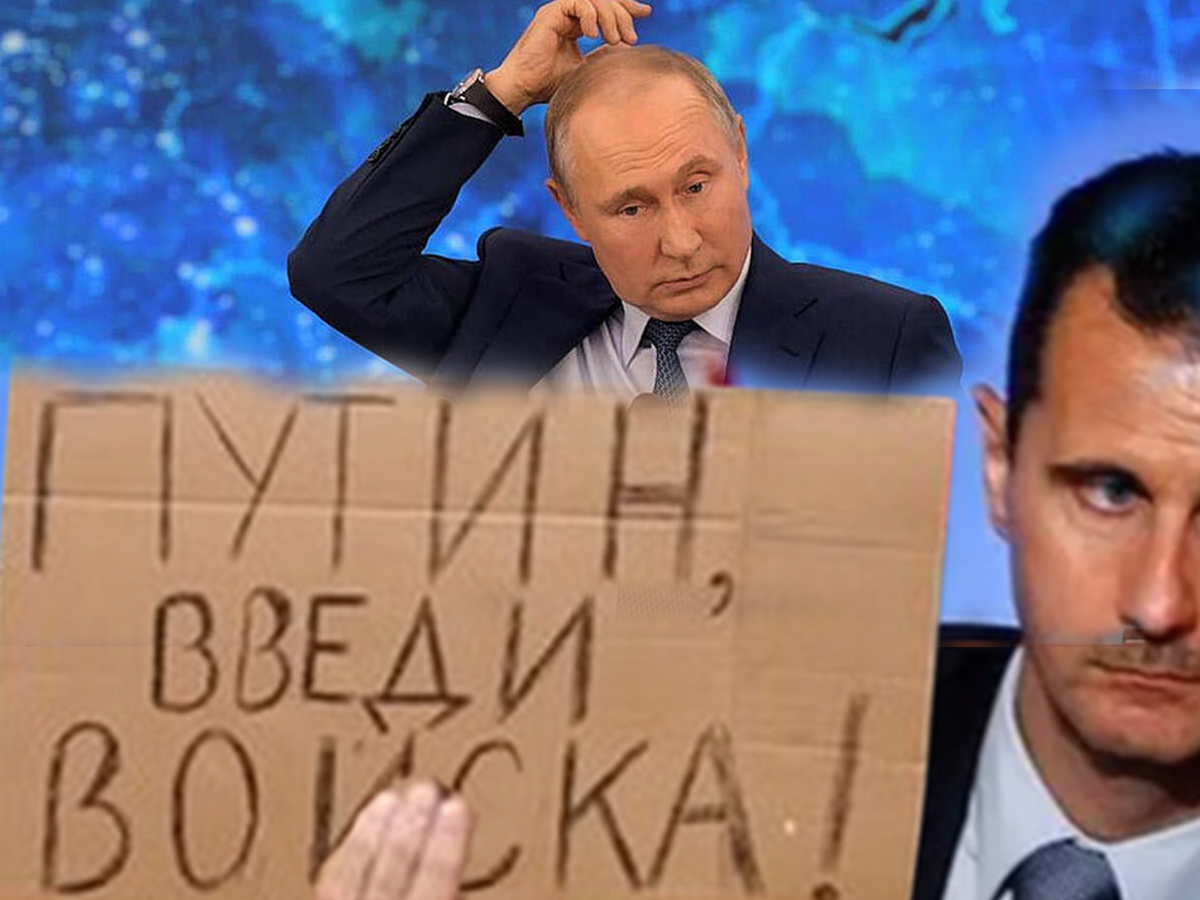
The “Axis of Evil” represented by Russia, Iran and Bashar al-Assad is under threat. Syrian rebels launched a large-scale offensive, capturing dozens of settlements in Aleppo province. This region, which until recently lay in ruins after fighting with the support of Russian aviation, has again become the epicenter of a violent confrontation.
The offensive of Syrian opposition forces, supported by Turkey, coincided with the weakening of Russia and Iran, distracted by their own problems. For Assad, this threatens disaster, and for his allies, another loss of strategic positions in the Middle East.
In material from NAnews We look at how the situation in Syria is evolving, what this offensive means for regional and global politics, and why Israel is keeping a close eye on this new threat.
Exacerbation of the Syrian conflict: what is happening?
For the first time in several years, Syria again found itself at the center of a major military conflict. At the end of November 2024, rebel forces, backed by Turkey, launched an offensive against the northern regions of the country, which are held by the army of Bashar al-Assad, Russian troops and pro-Iranian forces.
Main events:
- Capture territories. In a short period of time, the rebels established control over dozens of settlements and strategic objects.
- Losses among Assad's allies. Military equipment was destroyed, dozens of Syrian army soldiers were killed and wounded, as well as military personnel from Russia.
- International participation. Türkiye has been actively supporting the rebels, opening its borders and sending in fighters from Central Asia, while Russia has been carrying out airstrikes to try to stop the advance.
Reasons for the weakening of the “axis of evil”
There is obvious strategic timing in the Syrian rebel offensive. Russia, Iran and Syria are going through a difficult period, which has affected their ability to effectively resist.
- Russia: the war against Ukraine has depleted resources.
Moscow is focused on its aggression in Ukraine, trying to maintain control over the occupied territories. Attacks on civilian infrastructure, accompanied by sanctions, have weakened the economy and military capabilities.
- Iran: Israeli strikes and internal crises.
Tehran has been plagued by internal protests as well as Israeli attacks on targets in Lebanon and Gaza. As a result, Iran has to scatter resources, which weakens its position in Syria.
- Syria: political and military isolation.
The Bashar al-Assad regime is increasingly losing support within the country. The weakening of his army against the backdrop of an active rebel offensive threatens to completely destabilize the regime.
Quote:
“When Moscow and Tehran are distracted by their own problems, Assad loses even the limited support that allowed him to maintain power. The only question is how much longer he can hold out.” – experts comment for NAnews.
What do the parties to the conflict say?
Russia
Kremlin spokesman Dmitry Peskov called the rebel offensive “an attack on the sovereignty of Syria”. However, Moscow's real response has been limited to airstrikes, which have reportedly failed to stop the rebel advance.
Türkiye
Ankara is actively involved in the conflict through its proxy groups such as Sultan Suleiman Shah and other militias. The border with Syria is open, allowing the delivery of reinforcements and weapons.
Syrian rebels
Rebels, including the Druze Syrian Brigades group and Uzbek militia, are calling for mass defections from Assad's army. If this happens, the regime will be in an even more vulnerable position.
Israel's role: why is it important?
Israel has historically been a key player in the Syrian conflict. Strikes against Iranian and Hezbollah positions in Syria are carried out in order to contain pro-Iranian groups. However, destabilization of the region could create additional threats to Israel's security.
Quote:
“Israel is closely monitoring the situation in Syria. Strengthening opposition forces and weakening Iran and Assad are opportunities and challenges at the same time,” – analysts note NAnews.
How are events in Syria related to Ukraine?
Syria has long been a testing ground for the Russian military machine. The methods developed by Moscow in the Syrian war are actively used in Ukraine, including the destruction of civilian infrastructure and the use of mercenaries.
In 2023, Ukraine imposed sanctions against Syria after it recognized the annexation of Ukrainian territories. This became part of the global pressure on Russia and its allies.
Table: Comparison of positions of the parties
| Side | Resources | Goals |
|---|---|---|
| Syrian rebels | Türkiye, militias | Overthrow of Assad, weakening of Iran and Russia |
| Assad regime | Support for Russia and Iran | Retention of power, control over the northern regions |
| Russia | Aviation, Wagner mercenaries | Maintaining influence in the Middle East |
| Iran | Special forces, Hezbollah | Strengthening positions, transporting weapons to Lebanon |
Results and forecast
The situation in Syria threatens to escalate into a full-scale war between the forces of Assad, Iran and Russia on the one hand and opposition groups supported by Turkey on the other.
NAnews – Israel News continues to monitor developments. Subscribe to stay up to date with the latest news on the impact of the conflict on the Middle East, Israel and the world at large.
Leave a comment in Telegram channel NAnews ↓ — Israel News