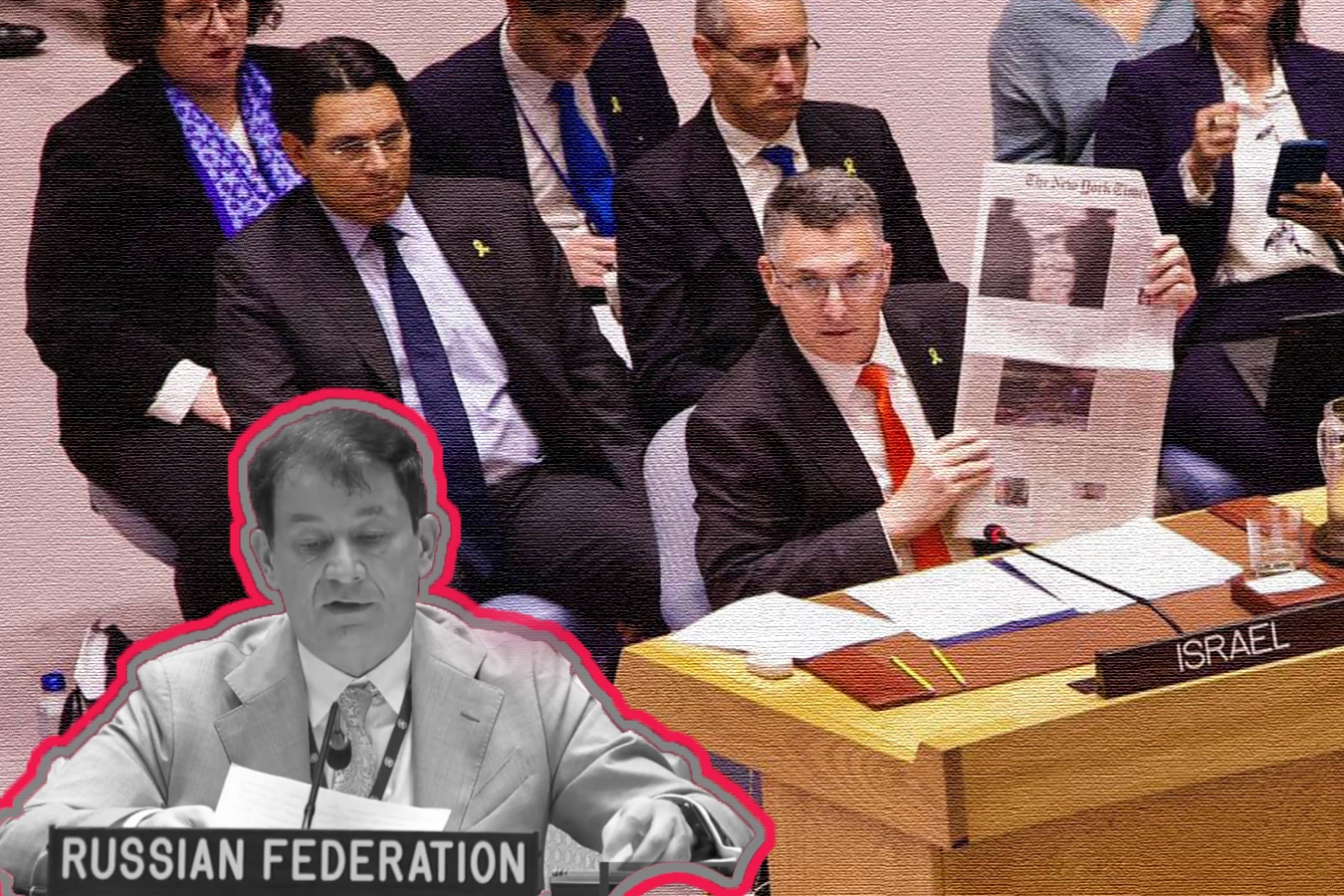
The Minister of Foreign Affairs of Israel, Gideon Saar, at the UN Security Council meeting on the night of August 6, 2025, sharply criticized the speech of the Russian representative, accusing him of spreading lies.
Palestinians learned propaganda from you – Israeli Foreign Minister criticized Russian representative at the UN
Saar noted that after three and a half years of Russian aggression against Ukraine, including bombings, the Russian representative’s statements sound cynical. He also addressed the Palestinian representative, stating that Palestinians adopted propaganda methods back in Soviet times, when Russia was their “teacher”. Saar added that such rhetoric helps to maintain terrorism.
“We have also heard so many lies here that I cannot enumerate them all.
It was truly funny to hear the representative of the Russian Federation — after three and a half years of brutal invasion and war in Ukraine, after bombings of civilians in Kyiv and other places — speaking here as if nothing happened.I also heard the Palestinian representative, and I must say: the Palestinians learned propaganda from you — back in the Soviet period, and you were good teachers. The Palestinians invented terror as a way to achieve their goals, and this applies to all Palestinian factions.
To this day, the Palestinian Authority continues to pay salaries to terrorists and their families depending on the severity of the terrorist act committed. Thus, they continue to encourage terrorism to this day.”
The speech by Foreign Minister Gideon Saar was delivered at a special meeting of the UN Security Council, initiated by him regarding Israeli hostages.
Israel’s ambassador to Ukraine, Michael Brodsky, called the speech remarkable.
It should be noted that Minister Gideon Saar has recently demonstrated a very pronounced pro-Ukrainian stance.
Recently, he condemned a Russian strike on Kyiv that took the lives of dozens of civilians. The Israeli foreign minister also made an intensive visit to Ukraine, meeting with senior Ukrainian officials and leaders of Jewish communities, as well as visiting the grave of Rabbi Nachman in Uman.
Ukraine acknowledged Gideon Saar’s speech
The head of the Office of the President of Ukraine, Andriy Yermak, wrote on August 6, 2025:
“Thank you, Gideon Saar, for your clarity and moral courage at the UN.
Silence in the face of terror is complicity. Hamas and Russia use the same terrorist methods. Barbarism has no ‘context’.”
“One crime cannot justify another.” UN Security Council condemns actions of Hamas and Israel in Gaza
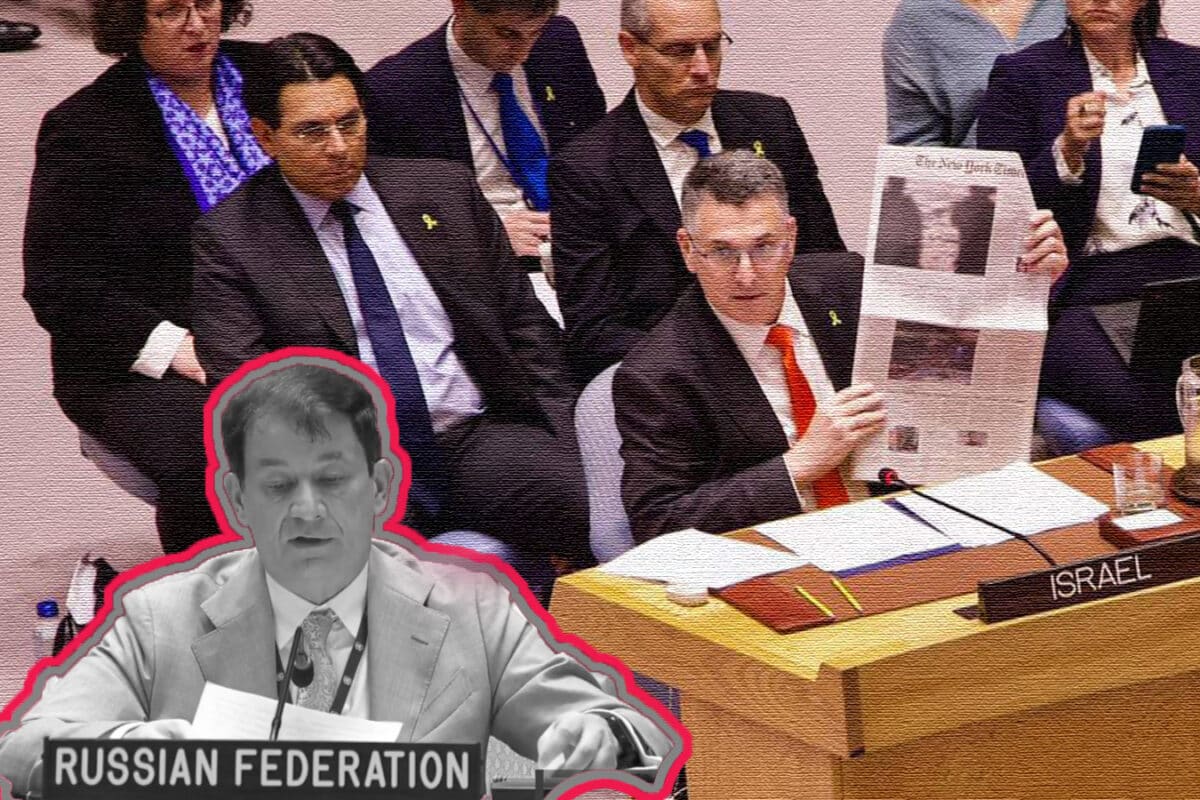
Members of the UN Security Council expressed sympathy for the Israeli hostages after Hamas published a video with an emaciated captive, while at the same time calling on Israel to end the “humanitarian catastrophe” it had created and allow aid deliveries to the “besieged territory”.
Most Security Council members accused Israel of “fueling the humanitarian crisis in Gaza”, pointing to the “two-month blockade of the sector by the government and military and the inability to deliver enough food and medicine to the war-torn territory”.
Israeli Foreign Minister Gideon Saar, who arrived in New York for the meeting, accused Russia, other Council members, and the international media of spreading “an enormous amount of lies” and anti-Israeli disinformation.
According to him, members of Hamas and Palestinian Islamic Jihad do not feed the hostages, while they themselves “enjoy meat, fish, and vegetables.” Saar stated that his country allows “huge volumes of aid” to enter the besieged territory and accused Hamas of looting.
The chief Israeli diplomat stated that the group steals food, medicines, and other necessities and uses them as a “financial instrument” for sale and profit. UN spokesperson Stephane Dujarric previously denied these claims, stating there was “no evidence” for them.
Saar also accused the Palestinians of “inventing terrorism” and Hamas of wanting to continue the war instead of reaching a ceasefire with Israel.
“The world has turned upside down while Hamas runs its propaganda machine,” he said. “A world in which Israel finds itself in the dock while fighting for its survival. This has a name. It is called antisemitism.”
Testimonies of the hostages’ relatives
Itay David, the brother of 24-year-old Evyatar David, who appeared in the Hamas video looking thin and weak in a Gaza tunnel, saying he was “digging his own grave”, called on the Security Council to take action and save their lives.
“Don’t let them die. We have no time. Don’t let them spend another minute in the dark.”
Calling his brother a “living skeleton”, Itay urged the 15 Council members during a video briefing to provide humanitarian aid to the hostages, saying that Hamas is breaking them psychologically and physically and denying them “the essentials for life”.
Israel criticized for “suffering of people in Gaza”
Many UN members, including the UK and Sierra Leone, praised Itay for standing up for his brother and condemned Hamas’s hostage-taking as a war crime, but also accused Israel of “committing its own crimes”.
Sierra Leone’s ambassador to the UN, Michael Imran Kanu, said that although taking hostages is an international crime that must be prosecuted, “one crime cannot justify another”.
“While we express deep concern for the fate of the hostages, we cannot ignore the broader humanitarian catastrophe that has engulfed Gaza,” he said. “The people of Gaza have been subjected to blockade and siege, depriving them of food, water, fuel, and medicine, which can also be considered a war crime.”
UK ambassador to the UN Barbara Woodward again expressed London’s support for the immediate release of hostages and condemned their use for propaganda as a “perverted” act.
“Hamas and its terrorist ideology can have no place in the future governance of Gaza and must never again threaten Israel’s security,” she said, but at the same time condemned Israel for “restricting aid and forcing the densely populated enclave to live in conditions akin to starvation”.
“After the ceasefire, the suffering of the hostages and Palestinian civilians reached new, shocking depths,” she said.“Israeli aid restrictions have led to famine now unfolding in Gaza,” report international experts monitoring hunger worldwide.”
Woodward said that last week she spoke with doctors who had worked in Gaza. “They saw children so badly malnourished that their wounds festered for months, not healing,” she said, “and saw baby formula confiscated by the Israeli military.”
“I urge Israel to take action to alleviate the terrible suffering,” she said.
Russia: “We urge Israel to stop this lawlessness”
Acting Permanent Representative of the Russian Federation to the UN Dmitry Polyanskiy spoke and said…
Fragments of his speech should be known to every sensible citizen of Israel:
“… We note the presence among us of the Israeli Foreign Minister Gideon Saar. (0:23) We listened carefully to Itay David and became acquainted with the letter from the Israeli side.
…(1:24) We share their pain, but cannot fail to note that from the mouths of people in an extremely emotional state and concerned for their children’s fate, there is also direct criticism of the country’s leadership, (1:36) which, in their opinion, by dragging out the negotiation process with Hamas, thus signs a death warrant for the remaining living hostages. (1:48) … there can be no justification for the collective punishment of Gaza residents and turning an entire region into a zone of total despair.
…
While the whole world watched in horror the footage of Rom Broslavsky and Vyatar David, shocking data came from Gaza about the deaths of more than 180 people from August 1 to 2. (3:02) We learn about such tragedies almost daily.
(3:05) Since October 2023, more than 61,000 Palestinians have been considered dead, including, according to UNICEF, more than 18,000 children. (3:17) Against this background, the overall situation in Gaza cannot be described otherwise than as a humanitarian catastrophe…
(3:29) The Palestinians themselves die in the enclave not only as a result of air bombs and artillery shells, but also due to widespread hunger and outbreaks of various diseases.
(3:40) According to the UN World Food Program, every third Palestinian goes hungry for several days. (3:46) The terrible statistics of casualties and lack of food are compounded by the dead and wounded in queues for food rations at so-called humanitarian fund locations for Gaza. (3:59) The count is in the thousands.
Since May 27, almost one and a half thousand Palestinians have been killed. (4:08) Serious concern is also caused by the consequences of the renewed practice, since the end of July, of dropping pallets of food aid by air. (4:18) Just yesterday, humanitarian bombs crushed to death two medical staff at the Al-Aqsa hospital in Deir al-Balah.
(4:27) UNRWA Commissioner-General Mr. Lazzarini in his recent comments warned against further use of this very dangerous and, moreover, expensive method of delivering aid, which costs a hundred times more than using land routes. (4:43) Meanwhile, more than 6,000 trucks with food supplies, enough for several months for the civilian population, are located around the perimeter of the sector.
(4:57) Mr. Chairman, we are shocked by the targeted attack by the IDF on the headquarters of the Palestinian Red Crescent Society in Khan Yunis, which killed one staff member and injured several people.
(5:10) Unfortunately, this is not the first case of killing members of the Red Crescent Society in Gaza. (5:14) We all remember how Israeli soldiers mercilessly shot ambulance staff of this organization, whose bodies were found in a mass grave in March. (5:24) We urge Israel to stop this lawlessness.
(5:27) Humanitarian and medical workers should not become targets, nor should the Red Crescent headquarters building, which is marked with the appropriate emblem and is clearly under the protection of international humanitarian law. (5:42) Contrary to the statements of Western Jerusalem, the humanitarian blockade of the enclave imposed by it since March essentially remains to this day. (5:50) Since July 27, partial relief and limited supplies have been announced as part of so-called tactical pauses.
(5:58) According to UN humanitarian structures, this is only a drop in the ocean compared to the acute needs of Gazans… . (6:10) In this context, we fully support the calls of UNRWA leadership and other relevant UN agencies for the immediate removal of obstacles to the delivery of everything needed to Gaza, including food, water, fuel and medicine. (6:25) We are extremely concerned about the aggressive campaign launched by Western Jerusalem against OCHA staff and its head Tom Fletcher, who give sharp and not always pleasant assessments for the Israeli leadership regarding the humanitarian situation in the enclave.
(6:41) We see that UN humanitarians are really trying to comprehensively analyze the situation and find a way to somehow improve the plight of peaceful Palestinians. (6:53) It remains an indisputable truth that in order to establish uninterrupted and unhindered deliveries of humanitarian aid, the main thing is to create the necessary safe conditions. (7:03) Unfortunately, regular calls for a ceasefire, made by both the UN Secretary-General and the overwhelming majority of the world community, remain without proper response from the Israeli leadership.
(7:17) In Western Jerusalem, they are still determined to wage war in Gaza by any means and under any pretext. They seek to avoid stopping the military operation in the sector. (7:31) Mr. Chairman, no less concern is caused by the course chosen by the Israeli authorities for the cleansing and colonization of the West Bank.
(7:41) Ordinary Palestinians and even foreigners fall victim daily to the ongoing raids by security forces and settler violence. (7:52) On July 30, the service vehicle of the Russian representative office to the Palestinian administration was attacked, and this happened with the connivance of Israeli soldiers. (8:10) In addition, new anti-records are being set for the destruction and expropriation of local residents’ property, the construction of new settlements and the legalization of outposts in order to cut off the main Palestinian cities from each other.
(8:25) The Knesset continues to pass new provocative resolutions. Following last year’s decisions to ban UNRWA, at the end of July, an equally dangerous decision was made to extend Israeli sovereignty to the West Bank. (8:41) It is obvious that comprehensive lines of non-recognition of Palestinians, whether from Gaza or the West Bank, carry new risks for the stability and security of the Middle East and may once again bring the region to the brink of a major war.
(8:58) It is also obvious that complete freedom of action for Israelis in Gaza and the West Bank would be impossible without direct military support and international political cover from the US. At the same time, the overwhelming majority of countries in the world reject this line. (9:22) Indicative in this regard were the US-Israeli boycott, which took place on July 28-30 at the high-level international conference in support of the two-state solution, as well as the few attempts by Washington to dissuade its partners from participating in this representative forum.
(9:40) There is some optimism that, despite open American pressure, most members of the international community were not afraid and showed solidarity with the Palestinian people. And some Western capitals, albeit belatedly, still announced plans to recognize the state of Palestine next month. …
We call on the parties, with the support of mediators, to return to the negotiating table to develop mutually acceptable solutions for restoring the ceasefire, releasing detainees, and unblocking humanitarian access to the Gaza Strip. (10:27) … We hope that all regional and international participants will work in this direction.
(10:42) The negotiation process must be returned to the political mainstream, which would allow for the consideration of both the legitimate security interests of Israel and the hard-won right of the Palestinian people to gain their own state within the 1967 borders.”
It was this speech that Saar responded to.