November 12, 2024 “Drone surveillance” ended with an explosion in the Nesher kindergarten, where the sirens did not sound. The already familiar picture of catching a Hezbollah drone in the North ended with its crash on the territory of a kindergarten in Nesher. Fortunately, no one was hurt. The IDF said the drone was being “surveilled”
At the end of October, a million Israelis sat in shelters while a drone was hunted across the North. Then he disappeared, flying around half of Israel. They found him only the next day – he fell in the Yokneam area.
Before and after, such incidents did not stop and each time they talked about “observation”. Sometimes squadrons of fighters took to the air, which are quite useless in the case of drones.
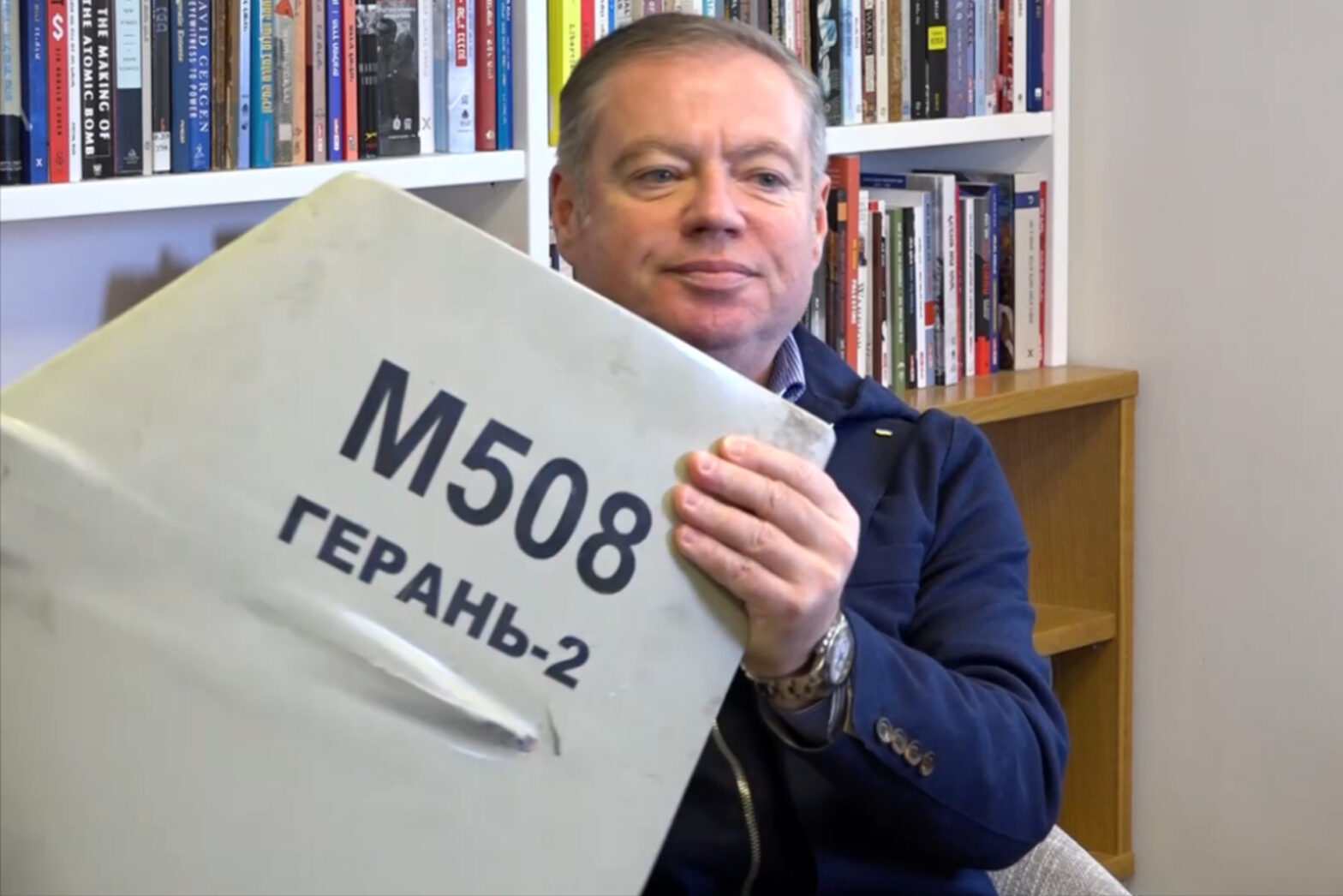
The danger from unmanned aerial vehicles (UAVs) has become urgent for both countries – Ukraine and Israel. In recent months, according to the publication Mako, Israeli companies are actively negotiating with Ukrainian colleagues, trying to join forces in countering the drone threat.
“Among the companies mentioned are Elbitwith which the Ukrainian Ambassador to Israel Korniychuk helped establish contact with the Ukrainian Ministry of Defense. Another Israeli company is R2which has developed a product to intercept UAVs and trains armies around the world. This company maintains contacts with Brave1 – a Ukrainian state platform whose goal is the research and development of advanced military technologies.”
The origins of cooperation: warnings that were not heeded
Ukraine warned Israel early on about the serious threat posed by Iranian kamikaze drones. These drones, as demonstrated by the attacks on October 7, 2023, have become a real test for Israel's defense. Israeli companies are now paying attention to the experience of Ukrainian colleagues who have undergone a “baptism of fire” in the conditions of a real war with Russia.
“No place in the world provides such opportunities for testing its developments as Ukraine,” notes Olena Bilusova, an expert at the Kyiv School of Economics.
A former high-ranking Ukrainian official said, writes Makothat representatives of at least one Ukrainian company engaged in innovative technologies related to the fight against drones arrived in Israel before the start of the war in the Gaza Strip, but could not even find colleagues in Israeli industry to meet with them “Not a single company agreed to meet with them in their office” Here's what the former boss says:
“Someone came to meet them at a fast food restaurant, and I think that was the only meeting. It was a humbling experience.”
Israeli technology companies are now looking for proven solutions that have been tested in real combat conditions. Ukrainian companies, for their part, strive to grow and profit from the international connections of Israeli companies. They cite the experience of almost three years of war and more than 7,000 UAVs launched from Russia into Ukraine since the beginning of 2024 alone, and about 2,000 in October last year alone.
By comparison, the latest data from the Israeli Ministry of Defense shows that since October 7, 2023, approximately 1,300 drones have been launched against Israel from all fronts combined: Lebanon, Gaza, Iraq, Syria, Yemen and Iran.
Advantages of Ukraine: unique experience and innovation
Ukraine has already created a powerful anti-UAV technology development industry, employing more than 200 companies. These companies have a wide range of experience and developments, including acoustic detection systems.
Real examples of cooperation
Cooperation between Israeli and Ukrainian companies in the field of protection against the threat of unmanned aerial vehicles (UAVs) has been actively developing in recent months. Companies from both countries are exchanging experience and technology, resulting in significant results in the field of defense.
Ukrainian companies and their developments
- Zbock
One company developing acoustic sensors to detect UAVs, missiles and other aerial threats is called Zbock. It develops special sensors that are placed in telecommunications towers and hidden locations along borders and other sensitive areas. These sensors are capable of detecting Iranian Shahed drones and cruise missiles at long range. Currently, the Zbock network covers about 5% of Ukraine, which is approximately five times the area of Israel. The data collected by these sensors is highly accurate, with false alarms as low as 2.5%. Zbock has attracted the attention of international players, including NATO states. Gen. James Hacker, commander of U.S. Air Forces Europe, recently praised Ukraine's acoustic systems, noting that the inexpensive devices—costing about a thousand dollars—can accurately determine the speed, direction and acceleration of a UAV.
Besides, Zbock began to develop partnerships with Israeli companies. Several Israeli security entrepreneurs have approached the company, and one of them is planning to visit Ukraine to study acoustic technology. An online visit was also held between a Ukrainian company specializing in robots and FPV drones and a group of Israeli entrepreneurs working in the security field. While it is unclear whether this will lead to contracts, both sides have shown a clear interest in sharing knowledge, including the interception of Iranian Shahed UAVs.
- Zbock
- Dronex
Dmitry Davydov, founder and CEO of the company Dronexwhich produces reusable interceptor drones, clarifies that the technologies developed by Ukrainian companies do not always meet the needs of Israel. “In Ukraine, for example, the time from detection to response can be several hours, whereas in Israel it is only a few minutes or even seconds,” he explains, noting the differences in the size of the countries. However, such differences can only be assessed after the systems are actually tested in combat conditions. He also emphasizes the importance of practical experience. The IDF's lack of experience in dealing with attacking UAVs before the war reduced the army's preparedness for this type of threat, he said. “The only way to make sure your system works is to test it in real combat conditions,” says Davydov. He admits that expectations were a little high in Israel and solutions had to be found that were more specific to the complexity of the UAV threat.
Davydov is well acquainted with military situations in both Ukraine and Israel. He began working in Ukraine after the Russian invasion, redirecting his company's activities to the security sector. In Israel, he has been working with the Ministry of Defense (MDaT) for the past year, using his experience gained in Ukraine. According to him, one of his companies operating in Europe recently negotiated with a Ukrainian manufacturer of acoustic sensors, which also operates in another European country. “If the sensors are tested in Israel, we can produce them together with Israeli partners,” he demonstrates an example of possible cooperation.
In addition, it is worth noting that Ukrainian companies have begun to circumvent the existing arms export ban that has been in place since the start of the war by directing production to neighboring countries such as Poland and Estonia and exporting products through them, including to Israel. The Ukrainian government also recently signaled its readiness to lift its export ban, including the export of UAV-related systems, which could broaden and deepen cooperation with Israel.
Tests and challenges: why Ukrainian technologies are not always suitable for Israel
Despite Ukraine's significant experience, technology integration often faces difficulties. As Vladimir Davydov, head of Dronex, notes, the difference in geography and response speed makes some Ukrainian technologies unsuitable for Israel, where a threat can approach in a matter of minutes.
“We must adapt our expectations to real conditions. The experience in Ukraine gave us a lot of useful things, but Israel needs a faster and more accurate response,” commented Davydov.
Political aspect and future of cooperation
I joined these words Ambassador of Ukraine to Israel, Evgeniy Korniychuk. Due to the sensitivity of the issue, he avoids providing precise details, but in conversation, he writes Makohe spoke in general terms about cooperation between private companies in Ukraine and Israel and confirmed that “Israeli defense companies are currently actively in contact with their Ukrainian counterparts”.
Among the companies mentioned are Elbitwith which Ambassador Korniychuk helped establish contact with the Ukrainian Ministry of Defense. Another Israeli company is R2which has developed a product to intercept UAVs and trains armies around the world. This company maintains contacts with Brave1 – a Ukrainian state platform whose goal is the research and development of advanced military technologies.
Western governments are generally inclined to support such cooperation between their countries' private defense companies and Brave1however, the CEO of the Israeli company noted that he did not receive any assistance from the IDF or the Israeli Ministry of Defense in establishing ties with the Ukrainian platform.
The Ukrainian Ambassador describes the cooperation between Ukrainian and Israeli companies as a force multiplier and emphasizes that it should have started a long time ago.
“One and one—Israel and Ukraine—are not just two, they are three or four.”he says.
“Israel brings technological knowledge and access to technology. We have extensive combat experience. Of course, we need to combine all this. Cooperation should have started a long time ago”.
Against the backdrop of growing challenges and dangers, the partnership between Israeli and Ukrainian companies is acquiring strategic importance. It is expected that this interaction will not only ensure the protection of both countries, but will also enable the integration of advanced security developments at the international level.
Leave a comment in Telegram – NAnews channel↓