
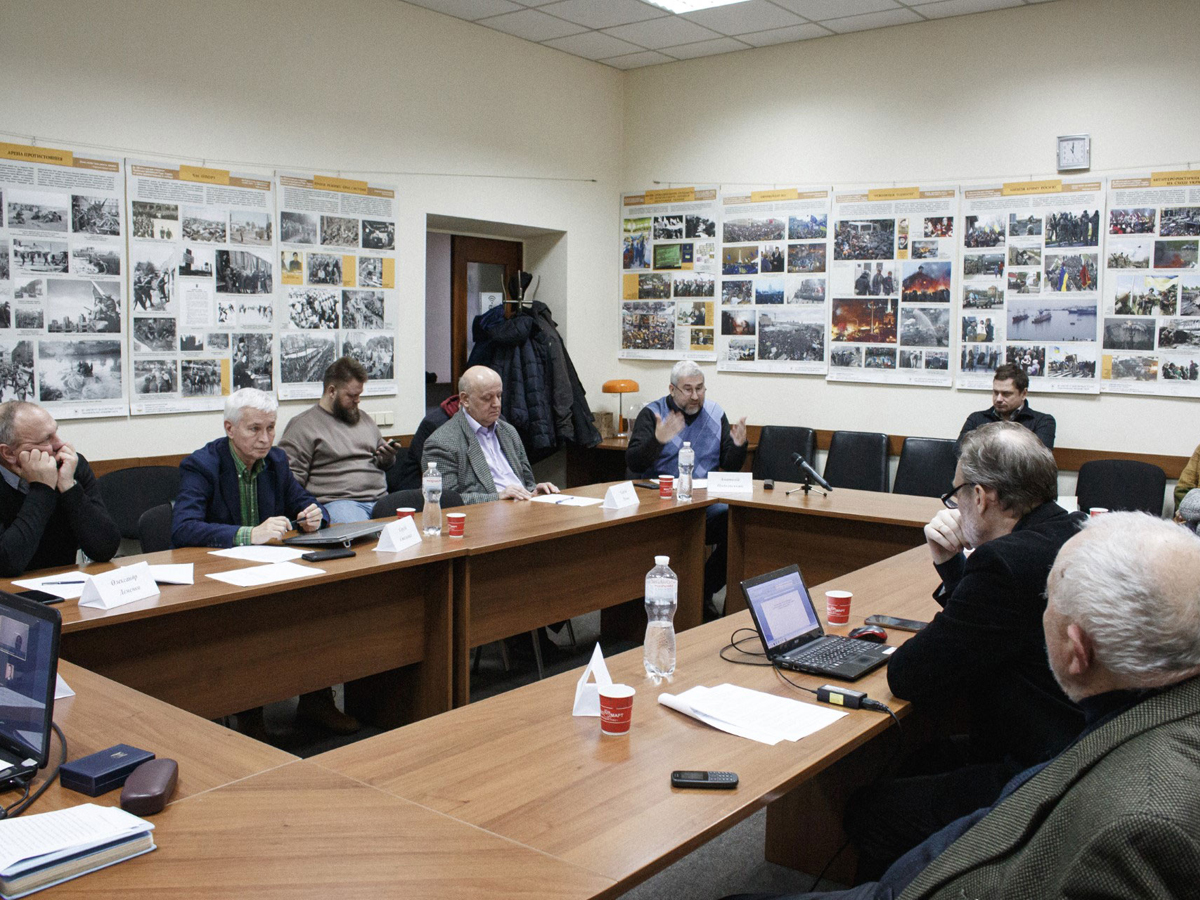
In November 2024, in Kyiv, at the Institute of World History of the National Academy of Sciences of Ukraine, an international conference entitled “European scientific discourse on the Holocaust: modern dimensions and research prospects”.
“This event brought together scholars, researchers and historians from different parts of the world to discuss key issues related to the history and memory of the Holocaust,” said the organizer Ukrainian Jewish Zustrich (UJE).
The conference covered a wide range of topics related to Holocaust studies. Among the most important questions were:
- Theoretical and methodological foundations of the world scientific discourse on the Holocaust.
- Features of the perception of the Holocaust in different countries, including Israel, the USA, Poland, France and Ukraine.
- Sources for research into the tragedy, including archival materials and eyewitness accounts.
- The role of international justice in preserving the memory of victims of the Holocaust.
- The specifics of two totalitarian regimes – Stalin's and Hitler's – in the context of the crimes of the Holocaust.
Symbolism of Babyn Yar: Ukrainian perspective
One of the central speakers of the conference was Vladislav Grinevich, regional manager Ukrainian Jewish Zustrich (UJE) in Ukraine and a graduate student at the Department of World History at Boris Grinchenko University of Kyiv. His talk, “Babi Yar as a Symbol of the Holocaust and Other Tragedies: A Historiographical Aspect,” was based on the book “Babi Yar: History and Memory.”
Book value:
- A unique Ukrainian perspective on the Babi Yar tragedy.
- The responsibility of both the Nazi and Stalinist regimes is emphasized.
- The book presents a multi-perspective vision of the tragedy, including victims of various groups: Jews, Roma, Ukrainian nationalists and others.
Grinevich noted:
“Babi Yar became not only a symbol of tragedy, but also of the struggle to preserve the memory of the Holocaust and other crimes that the Soviet authorities tried to hide.”
The special role of the UJE
Ukrainian Jewish Zustrich (UJE) played an important role in the creation of the book “Babi Yar: History and Memory.” The organization supported the preparation of events for the 75th anniversary of the Babi Yar tragedy in 2016. In addition, UJE continues to develop international projects aimed at preserving the memory of the Holocaust.
The significance of the conference for Israel and Ukraine
Cooperation between Israel and Ukraine in the field of Holocaust research and preserving the memory of the victims of this tragedy continues to deepen. Important to note:
- Common historical lessons that form the basis for dialogue between the Ukrainian and Jewish peoples.
- Recognition of mutual contributions to the development of science, culture and history.
- The need for joint educational projects to popularize knowledge about the Holocaust.
Conference program
The event included:
- Panel discussions on the impact of the Holocaust on modern society.
- Presentation of new books, including the English-language edition of “Babi Yar: History and Memory.”
- Discussion of the role of international organizations such as UJE in preserving historical memory.
Results and next steps
The conference emphasized the importance of international dialogue on Holocaust research. This event once again recalled the need to preserve the memory of the tragedy, attracting the attention of young people and strengthening cultural ties between Israel and Ukraine.
Our website NAnews – Israel News will follow further events organized by UJE and other international partners. Subscribe to us so as not to miss new articles about key events in Israel and Ukraine.
Leave a comment on Telegram – channel NAneNAnewsnk" href="https://nikk.agency/en/international-conference-on/" rel="noopener">International conference on the Holocaust in Kyiv: scientific discussions, historical memory and new perspectives“appeared first on NAnews – Nikk.Agency Israel News NIKK.