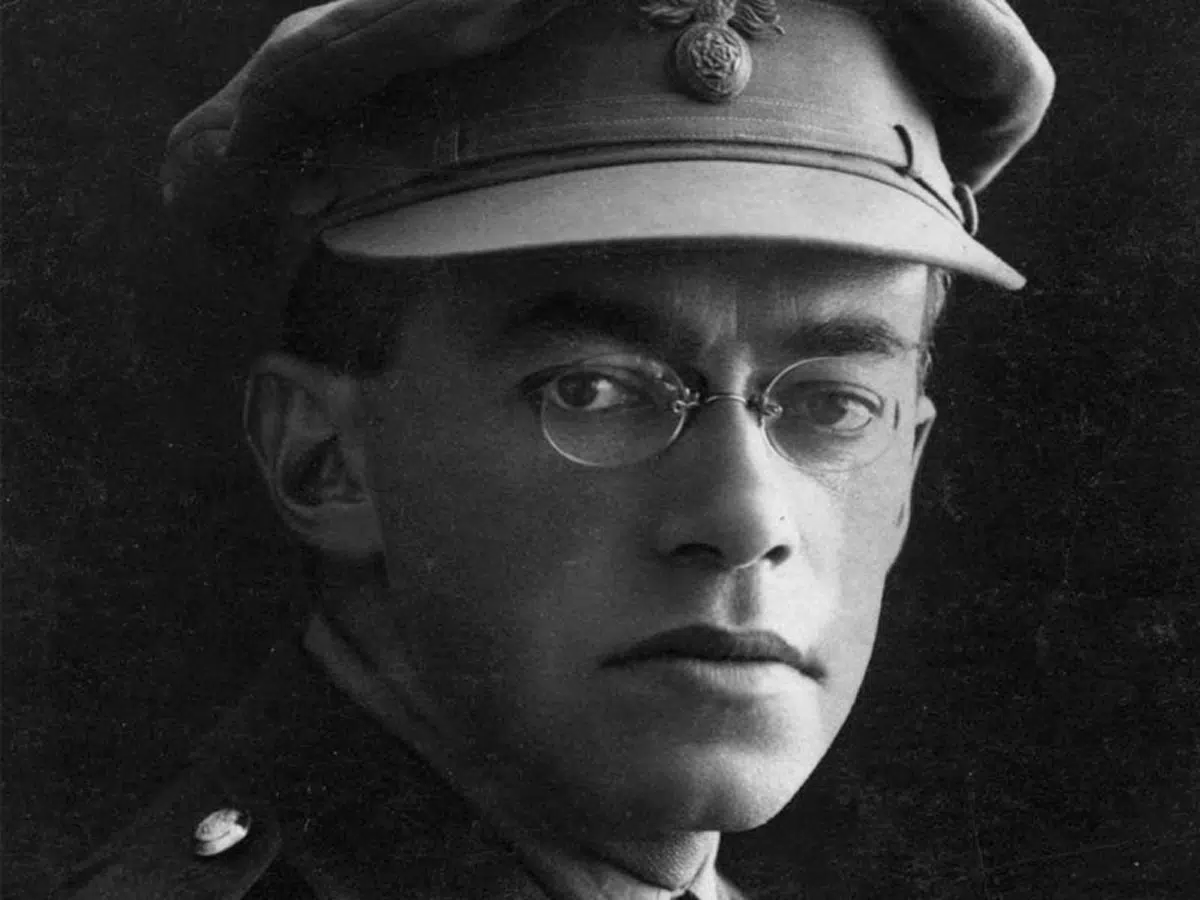
On October 17, 1880, Vladimir (Zeev) Jabotinsky, an outstanding Jewish public figure, writer, journalist, translator and founder of the Revisionist Zionist movement, was born in Odessa (Ukraine).
Jabotinsky fought for the creation of the state of Israel and favorably viewed the idea of free national and cultural development of any people within a sovereign state.
From an early age he stood out as a gifted student with an interest in languages, literature and social issues. Jabotinsky graduated from educational institutions in Italy and Switzerland, where he studied law and journalism, which later determined his professional career.
Jabotinsky became a famous publicist and writer, whose articles and works attracted the attention of the world community. From an early age, he was actively involved in the political life of the Jewish diaspora and soon became one of the main ideologists of Zionism, a movement that sought to create an independent Jewish state in Palestine.
Revisionist Zionism: Jabotinsky's Political Struggle
In 1925, Jabotinsky founded the Revisionist Zionist movement, which became a key movement in Jewish political thought at the time. The main ideas of Jabotinsky's revisionist Zionism included the following principles:
- Creation of a Jewish majority on both banks of the Jordan River.
- The establishment of a Jewish state in Palestine, built on the principles of justice and morality.
- Complete restoration of the Jewish nation in the historical territory of Palestine.
- Liquidation of the Jewish Diaspora and repatriation of all Jews wishing to return to their homeland.
Jabotinsky steadfastly defended the view that the national interests of the Jewish people stood above any other personal or group ambitions. He believed that “Palestine” should become the center of Jewish civilization and state.
“Jabotinsky was a man whose ideas fundamentally changed the course of Jewish history, and his legacy remains an integral part of the Israeli political system today.”
Jabotinsky and the Ukrainian national movement
One of the most important episodes of Jabotinsky's life was his collaboration with Ukrainian nationalists and figures such as Pyotr Struve and Maxim Slavinsky. At the beginning of the 20th century, Jabotinsky actively interacted with representatives of the Ukrainian intelligentsia, supporting the ideas of national self-determination of Ukraine.
Jabotinsky believed that every people has the right to national self-determination, including Ukrainians. In response to Struve's ideas about a “united Russian nation”, Jabotinsky strongly defended the Ukrainian national movement and published several articles supporting the right of Ukrainians to independence.
Quote from Jabotinsky about Shevchenko:
“He (Shevchenko) gave both his people and the world clear, unshakable proof that the Ukrainian soul is capable of the highest heights of original cultural creativity… Shevchenko will always remain what nature created him: a dazzling precedent that does not allow Ukrainians to deviate from the national path revival.”
Alliance with Maxim Slavinsky: Defense of the Jewish Population
Jabotinsky and Maxim Slavinsky, the UPR ambassador to Czechoslovakia, had a long history of friendship and political cooperation. One of the striking examples of their interaction was the agreement on the creation of the Jewish gendarmerie, concluded in 1921 in Carlsbad. This alliance was aimed at protecting the Jewish population from possible pogroms in territories controlled by the Ukrainian People's Republic (UNR).
Quote:
“Zhabotinsky’s cooperation with Ukrainian political figures emphasizes his commitment to the ideas of national freedom and mutual support of peoples.”
Jabotinsky and the State of Israel
Jabotinsky played a vital role in the creation of the State of Israel. His ideology formed the basis for the formation of modern right-wing parties in Israel, such as the Likud party. In 1948, Menachem Begin, a student of Jabotinsky, founded the Herut movement, which became a continuation of his teacher's political program. Subsequently, Herut turned into Likud, a party that still remains one of the leading political forces in Israel.
The Jabotinsky Institute in Tel Aviv is dedicated to perpetuating the memory and ideas of the great thinker. Also in the building where the Jabotinsky Institute is located is the headquarters of the Likud party. This is a symbolic reminder that Jabotinsky's ideas are still alive and relevant.
Memory of Jabotinsky:
- In Israel, streets in Tel Aviv, Petah Tikva and other cities are named after him.
- There is also a street in Kyiv named after Vladimir Zhabotinsky.
- Jabotinsky's ashes were transferred to Jerusalem in 1964, according to his will, and buried on Mount Herzl, which symbolized his deep commitment to the creation of a Jewish state.
Political struggle and confrontation with Nazi Germany
With Adolf Hitler's rise to power in Germany in 1933, Jabotinsky became one of the main supporters of the idea of a worldwide boycott of German goods. He categorically opposed cooperation with the Nazi regime and criticized the agreement between the Jewish Agency and the German government, which concerned the repatriation of German Jews to Palestine.
Quote from Jabotinsky about Petlyura:
“I grew up with them, together with them I fought against anti-Semites and Russifiers – Jewish and Ukrainian. Neither I nor the rest of the thinking Zionists in the south of Russia will be convinced that people of this type can be considered anti-Semitic.”
Personal legacy of Jabotinsky
The personality of Vladimir Jabotinsky has become an important part of not only Jewish, but also world history. His works and ideas had a profound influence on the development of both Israeli and Ukrainian culture and politics. His biography reflects the struggle for freedom, equality and independence that continues to inspire generations of politicians and public figures.
Key points in Jabotinsky's biography:
Jabotinsky in modern culture
The name of Vladimir Jabotinsky is widely immortalized in Israel and beyond. Streets, institutions, and many monuments are named after him, highlighting his enormous contribution to the creation and development of the State of Israel.
Jabotinsky remains a symbol of the struggle for national interests, freedom and dignity of all peoples with whom he interacted throughout his life.
Quote from NAnews:
“Jabotinsky was not only the creator of revisionist Zionism, but also a passionate supporter of the ideas of freedom and justice that continue to inspire modern politicians.”