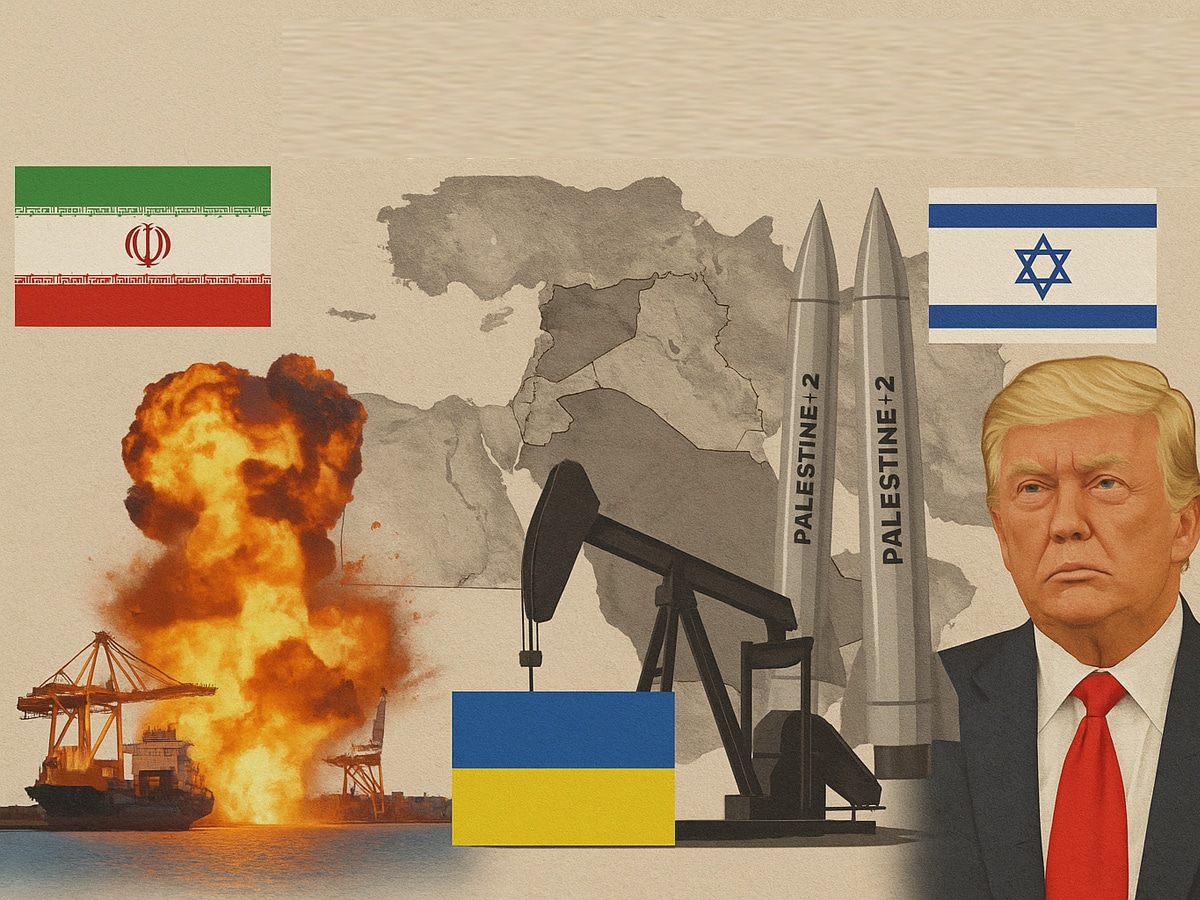
Last week, the Middle East was filled with significant events that could indirectly or directly affect the course of the war in Ukraine. Among them are the postponed negotiations between Iran and the USA, the explosion at the Shahid Rajaee port, the Houthi missile strike on Ben Gurion Airport, Saudi Arabia’s decision to increase oil production, and the announced visit of Donald Trump to the region in May 2025.
Igor Semivolos, Director of the Center for Middle Eastern Studies, has prepared a detailed analysis of these events, based on the research of BESA Center Perspectives Paper No. 2,335, authored by Shai Shabtai. In this research, Shabtai offers nine parameters to analyze the events and their potential consequences for Ukraine.
1. Verification and Validity
The first important stage of the analysis is the verification of facts and assessing how accurate our evaluations might be. Shabtai analyzes the events based on facts and tries to minimize the influence of bias, which can distort the perception of the situation.
Postponement of Negotiations Between Iran and the USA
The postponement of the negotiations between the USA and Iran, which was scheduled for May 3, 2025, was caused by “logistical and technical reasons.” This postponement undermines confidence that the negotiations will lead to progress in the nuclear deal. Since the USA withdrew from the JCPOA (Joint Comprehensive Plan of Action) in 2018, any delay in negotiations might be interpreted as a failure, although the true reasons for the delay could be much less dramatic.
Explosion at Shahid Rajaee Port
Iranian sources claim that “negligence” was the cause of the explosion at Shahid Rajaee port, but there is no official data. Social media have actively discussed the possibility of Israeli sabotage, considering suspicions against Israel, which is actively fighting Iran on multiple fronts. However, without factual evidence, this version remains only a hypothesis.
Houthi Strike on Ben Gurion Airport
The Houthis, supported by Iran, launched a missile strike on Ben Gurion Airport, which caused damage and halted air traffic. This confirms that Iran not only supports the Houthis but also influences Israel’s security through them. Despite this, Iran officially denies its involvement in the attack, complicating direct accusations against it.
Saudi Arabia’s Oil Decision
Saudi Arabia has announced its intention to increase oil production to stabilize prices at $45–50 per barrel. This step aims to weaken Russia and Iran, who derive a significant portion of their revenues from oil exports. However, OPEC+ (including Russia) may intervene to adjust prices, allowing Russia to partially compensate for economic losses.
Trump’s Visit
Donald Trump’s visit, which is scheduled for May 2025, has caused much speculation, but there are no details yet regarding the decisions to be made during his visit. It is known that Trump’s rhetoric emphasizes active US influence on the situation in the region, which could affect the policy towards Ukraine.
2. Evaluation Context
Now, let’s assess the external and internal circumstances that shape these events. It is important to understand which factors influence the process, even if Iran or Russia do not change their strategies.
Regional Factors
The delay in the negotiations between Iran and the USA slows down the potential progress in the nuclear deal, leaving sanctions in place and supporting Iran’s cooperation with Russia. The explosion at the port, if it is sabotage, could hinder Iran’s export of military equipment to Russia, which certainly matters for Ukraine.
International Factors
Russia is actively involved in the negotiations, offering to preserve Iranian uranium, which strengthens Moscow’s influence in the region. At the same time, China continues to support Iran and Russia in their confrontation with the West. European countries, such as France and Germany, are concerned that they are being excluded from the negotiations, which could lead to a split in the West’s position.
3. Assessment Levels
On a strategic level, a successful agreement could lower oil prices and stop the flow of Iranian weapons to Russia, which would be a real breakthrough for Ukraine. In case of failure, on the other hand, the weakening of Iran and Russia’s positions will be less significant.
Operational Factors
It is necessary to lobby through the USA and the EU for a clause in the nuclear deal to stop Iranian weapons shipments. It is also important to closely monitor how the port explosion affects Iran’s export opportunities and to study the Houthis’ rockets, which are similar to Russian ones, for preparing anti-missile defense systems.
Tactical Factors
The strike on Ben Gurion Airport shows that ballistic missiles are a serious threat that Ukraine must confront. Ukraine urgently needs to improve its air defense system to counter such threats. It is also worth paying attention to the effectiveness of Iranian drones and missiles, which may arrive in Russia, increasing the threat to Ukraine.
4. Projection
If the negotiations end successfully, it will mean that Russia will lose oil revenues, and Iran will lose military and technical assistance. In case of failure, Iran and Russia will remain strong allies, making it more difficult for Ukraine. Trump’s visit may divert the West’s attention from Ukraine, focusing it on Israel or Iran.
5. Impact of Responding to Opportunities and Risks
In this context, Ukraine’s response to the opportunities and risks presented by changes in oil policy and negotiations is crucial. Ukraine must intensively lobby its interests through the USA and the EU to continue receiving support.
NAnews https://nikk.agency/ — we are always at the center of events, analyzing current threats and opportunities to provide our readers with a full picture of what is happening.